To identify dog treat fillers, read the ingredient list top to bottom and flag vague names like meat by-products, cereals, and derivatives. Check for splitting, where the same base ingredient appears under multiple names such as rice, rice flour, and rice bran, since combined they may outweigh the named meat. Match front claims to the list and read the guaranteed analysis.
Ingredients are listed by weight before cooking, so the first five ingredients show what the treat is mostly made of.
A with real chicken claim is misleading if chicken appears sixth or later on the ingredient list.
Artificial colors, artificial flavors, and chemical preservatives add nothing your dog needs.
A treat leading with starch but showing low protein and high fiber is mostly cheap bulk.
Single-ingredient treats remove the guesswork for dogs with sensitive stomachs or allergies.
Why Dog Treat Fillers Are Harder to Spot Than You Think
Learning how to identify dog treat fillers starts with one uncomfortable fact: "filler" is not a legal term.
So the same ingredient can be a filler to one owner and a useful binder to another. Corn, rice, and potato starch all fall into that gray zone.
Here's what most guides get wrong: they hand you a banned-ingredient list and skip the label-reading method. We'll fix that.
How to Read Dog Treat Labels Before You Judge an Ingredient
Reading a dog treat label means checking five things in a fixed order: the front-of-package claims, the ingredient list, the order of ingredients, how specific each name is, and the guaranteed analysis. Treat these as separate checks. A treat can pass one and fail another.
Start with the panel, not the front of the bag. Marketing words like "natural," "premium," and "holistic" carry little regulatory weight. The ingredient list is where the real information lives.
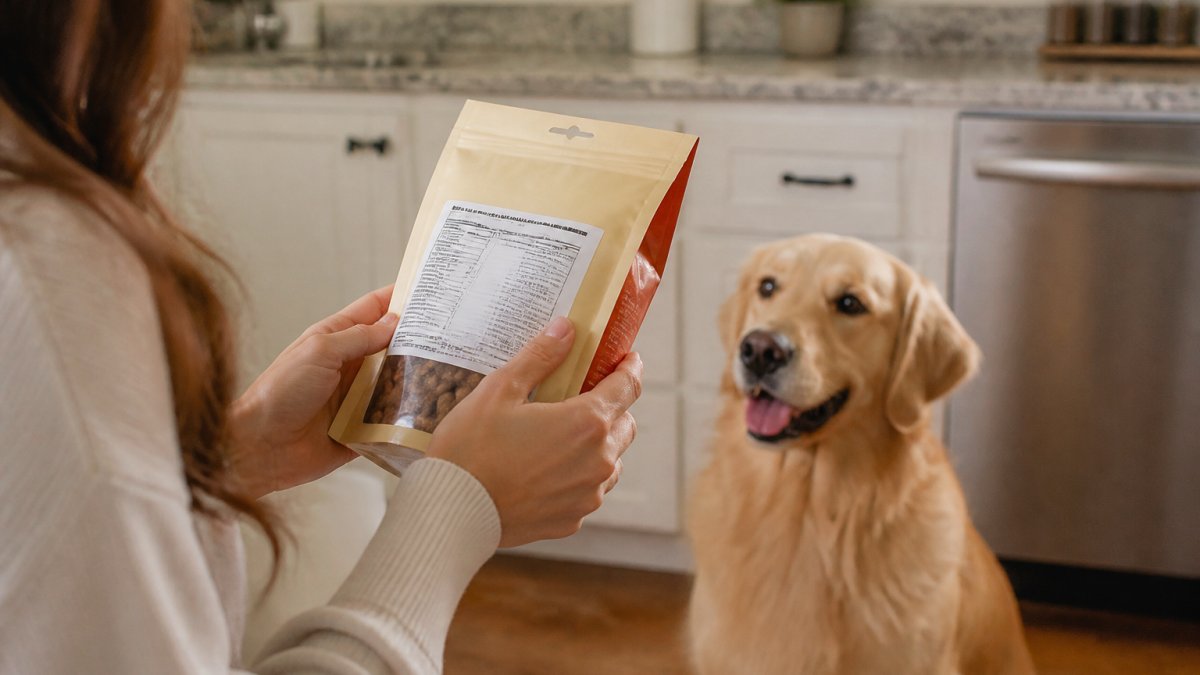
Close-up of a person's hands holding a dog treat bag and reading the ingredient panel, with a golden retriever sitting patiently nearby in a bright kitchen
A 7-Step Treat-Label Checklist
Most label-reading advice is written for dog food, not treats. Treats have shorter ingredient lists, smaller serving sizes, and looser claim rules, so the method needs to be adapted. Use this repeatable sequence every time you pick up a bag:
Flip past the front. Ignore "natural," "premium," and "vet-recommended" until you've read the panel. These words are marketing, not nutrition.
Read the ingredient list top to bottom. Note the first five ingredients, that's where the bulk of the treat comes from.
Flag vague names. Circle anything you can't picture: "meat by-products," "cereals," "derivatives," "animal digest," "natural flavors."
Check for splitting. Look for the same base ingredient listed under multiple names (rice, rice flour, rice bran; potato starch, potato flour). Combined, they may outweigh the named meat.
Match front claims to the list. If the bag says "with real chicken," find chicken on the list. If it's sixth, the claim is technically true but misleading.
Read the guaranteed analysis. Note minimum crude protein, minimum crude fat, maximum crude fiber, and maximum moisture.
Check calories per treat. A treat is a supplement, not a meal. Calories per treat tell you how much of the daily ration you're spending on rewards.
Pro TipPhotograph the ingredient panel on your phone the first time you buy a new treat. Comparing two photos side by side is faster than re-reading two bags in the aisle.
Ingredient Order and the First Five Ingredients
Ingredients are listed by weight before cooking. The first five ingredients tell you what the treat is mostly made of. If a named meat sits first, the base is animal protein. If corn, wheat, or a starch leads the list, the treat is built on carbohydrates.
Watch for "splitting." A maker can list rice, rice flour, and potato starch separately so no single grain tops the list. Combined, they may outweigh the meat.
Named Ingredients vs. Vague Ingredient Names
Named ingredients are specific: "chicken," "beef liver," "sweet potato." Vague names are not: "meat by-products," "cereals," "derivatives," "animal digest." A named source tells you what your dog is eating. A vague one does not.
Our rule: if you can't picture the ingredient, treat it as a question mark, not automatically a red flag. A named by-product like "chicken by-product meal" is more informative than an unnamed "meat meal," even if neither is a premium cut.
How Front-of-Package Claims Work on Treats
Front-of-package claims follow labeling rules, but those rules are looser than most owners assume. A claim like "with real chicken" generally means chicken is present in some amount, not that it's the main ingredient.
The practical test: find the claimed ingredient on the list. If it appears in the top three, the claim reflects the product. If it appears sixth or later, the claim is doing marketing work, not nutritional work.
Key TakeawayThe fastest way to judge a treat is to read the first five ingredients and the guaranteed analysis together. The list tells you what's in it; the analysis tells you what it delivers.
Common Fillers in Dog Treats and What They Actually Do
Most common fillers in dog treats serve a real purpose: they bind, add crunch, carry flavor, or cut cost. Corn, wheat, and soy are cheap energy sources. Rice and rice flour help treats hold shape. Potato starch and other starches act as binders.
None of these is poison. The issue is proportion. A treat that is mostly starch delivers little nutritional value for the calories.
Corn, wheat, soy: cheap carbohydrates and protein
Rice and rice flour: texture and binding
Potato starch: moisture control and shape
Dog Treat Ingredients to Avoid and Red Flags to Watch For
The dog treat ingredients to avoid are the ones that add nothing your dog needs: artificial colors, artificial flavors, and chemical preservatives. These exist for shelf appeal, not nutrition. A treat doesn't need to be bright red or smell like bacon to be good.
Other red flags:
Vague names high in the list, like "meat by-products" first
Multiple starches stacked to hide total grain content
No guaranteed analysis printed anywhere
Artificial Colors, Flavors, and Preservatives
Artificial colors make treats look appealing to people, not dogs. Artificial flavors mask cheap base ingredients. Some preservatives, like BHA and BHT, are worth limiting where you can. None of these improve nutritional value. When you spot them, ask what they're covering for.
How to Tell Functional Ingredients From Low-Value Fillers
A functional ingredient does a job for your dog's body. A low-value filler does a job for the manufacturer. That's the dividing line, but the same ingredient can land on either side depending on dose, context, and the rest of the formula.
Corn is the clearest example. In a treat where corn is the first ingredient and the guaranteed analysis shows low protein and high fiber, corn is mostly cheap bulk.
The Same Ingredient, Two Roles
Ingredient
Functional role
Low-value role
Corn
Energy source, texture
Cheap bulk when it leads the list
Rice / rice flour
Binding, crunch
Splitting partner to hide total grain
Potato starch
Moisture control, shape
Binder used only to cut cost
Glycerin
Keeps soft treats from drying out
Humectant padding a low-meat formula
Pumpkin
Fiber, digestion support
Rarely a filler, usually purposeful
Notice that none of these ingredients is inherently good or bad. The question is what job it's doing and whether the rest of the formula supports that job.
Three Questions to Ask About Any Ingredient
Does this ingredient add protein, fiber, fat, or a specific nutrient? If yes, it's contributing something measurable.
Would the treat work without it? A binder that holds a soft treat together is functional. A color added for shelf appeal is not.
Is it listed first because it's the main event, or because it's cheap? Cross-check against the guaranteed analysis. A treat that leads with a starch but shows low protein and high fiber is telling you the starch is the point.
When a Carbohydrate or Binder Is Actually a Problem
Most practitioners find that carbohydrates and binders become a problem in three situations:
They dominate the formula. If the first three ingredients are starches or grains, the treat is mostly carbohydrate regardless of what the front of the bag says.
They're stacked to obscure the total. Rice, rice flour, and rice bran listed separately can hide a grain-heavy formula behind a meat-first headline.
They replace nutrition your dog needs. A training treat that is mostly starch delivers calories without much protein or fat, fine occasionally, less ideal as a daily reward.
Outside those situations, a grain or starch in a treat is not automatically a red flag. Dogs with specific sensitivities may need to avoid certain ingredients, but that's an individual health question, not a universal rule.
Watch OutIf your dog has a diagnosed allergy or a sensitive stomach, don't rely on label reading alone. Ask your veterinarian which ingredients to avoid for your dog specifically, then use the label to verify.
If you want to browse treats built around purposeful ingredients, our Functional Support collection groups them in one place.
Checking the Guaranteed Analysis and Feeding Context
The guaranteed analysis gives you minimum crude protein, minimum crude fat, maximum crude fiber, and maximum moisture. It's the closest thing to a nutrition snapshot on the bag.
Then factor in feeding context. A high-protein treat still counts toward daily calories. Check the calories per treat and adjust meals if you're handing out a lot during training. A treat is a supplement, not a meal replacement.
Choosing Dog Treats Without Fillers for Sensitive Dogs
For a dog with a sensitive stomach or allergies, the safest path is a short ingredient list. Single-ingredient treats remove the guesswork, because there's nothing to decode.
At The Pet Gourmet®, we've baked treats in the USA for over 20 years with real ingredients and no fillers or artificial additives. Our freeze-dried line keeps it simple:
These work as training rewards or crumbled over kibble as a topper. For a dog with known allergies, introduce any new protein slowly and watch for reactions.
Freeze Dried Lamb Liver Dog Treats & Topper
Freeze Dried Beef Liver Dog Treats & Topper
Freeze Dried Chicken Breast Dog Treats & Topper
Shop Single-Ingredient Treats From The Pet Gourmet
Reading labels gets easier with practice, but the simplest shortcut is a treat with one ingredient. No order to decode. No vague names. Nothing to second-guess.
That's the standard we hold ourselves to at The Pet Gourmet®. Every batch is baked in the USA with real ingredients, no fillers, and no artificial additives.
Get started with The Pet Gourmet® and give your dog treats you can read at a glance.
Frequently Asked Questions
What ingredients are considered fillers in dog treats?
Filler is an informal, buyer-dependent term rather than a defined ingredient category, so there is no official list. In practice, people use it for low-cost bulk ingredients such as corn, wheat, soy, rice flour, potato starch, and cereal by-products that add volume or texture without much nutritional value. The same ingredient may be a filler in one formula and a functional binder in another, so check its position in the ingredient list and what else the treat contains before deciding.
How can you tell if a dog treat contains fillers?
Start with the ingredient list. If starches, cereals, or syrups appear among the first five ingredients, the treat is built around them. Look for vague names like meat by-products or animal digest, and check whether a named protein such as chicken or beef leads the list. Then compare the guaranteed analysis: a treat with high crude protein and a short ingredient list usually carries fewer low-value fillers than a long, grain-heavy formula.
Are grains always fillers in dog treats?
No. Grains like rice, oats, and wheat supply carbohydrates, fiber, and texture, and many dogs digest them without issue. They become filler-like when they dominate the formula or stand in for protein. A treat listing rice flour first and chicken fifth is mostly grain. For dogs with diagnosed grain sensitivities, grain-free options make sense, but for most dogs the decision should rest on ingredient order and overall nutritional value, not on grain content alone.
What does a guaranteed analysis tell you about dog treats?
The guaranteed analysis lists minimum crude protein and crude fat plus maximum crude fiber and moisture. It will not name fillers, but it shows what the formula delivers. Compare it with the ingredient list: a treat claiming real meat but showing low protein and a starch-first list is mostly filler. Also check calories per treat so you can fit rewards into daily feeding guidelines without overfeeding.
Sassie was a little anxious at first with the pizza soft baked treat but it’s her favorite now. Which we have to order more of them. They smelled good enough for me to possibly try a bite.