Benefits of Goat Milk Toppers for Dogs and How to Serve Them
Last Updated: November 21, 2026
Quick Summary
Goat milk toppers add flavor, moisture, protein, calcium, and naturally occurring probiotics to a dog's regular food, often winning over picky eaters. Start with half the suggested serving for three to five days, then increase gradually while watching stool and appetite. Choose a pasteurized topper with goat milk as the first ingredient and no fillers, sugars, or artificial additives.
Small dogs under 20 lb start with 1 teaspoon and typically get 1-2 teaspoons daily.
Dogs with a confirmed dairy allergy should not receive goat milk toppers at all.
Goat milk is relatively high in fat, so dogs with pancreatitis should skip it without vet sign-off.
Mix powdered toppers with warm, not boiling, water and refrigerate leftovers promptly.
The Pet Gourmet's Goat's Milk Sprinkles use just two ingredients and list 25% minimum crude protein.
Want a topper your dog will actually love?The Pet Gourmet® makes all-natural goat milk toppers with real ingredients and no fillers.
Why Goat Milk Toppers Are Gaining Ground in Dog Bowls
Goat milk toppers are a simple, nutrient-rich addition to a dog's regular food, and they are showing up in more bowls because they add flavor, moisture, and naturally occurring probiotics without a complicated routine.
The appeal is easy to understand. Commercial toppers often list goat milk as a leading ingredient and market it as a way to win over picky eaters, according to Fera Pets' goat milk topper product page.
But the health claims deserve a closer look. A 2023 review in Food Reviews International examined goat milk's functional properties and reported research on potential immune and anti-inflammatory effects, yet the authors did not study dog toppers specifically (the PubMed Central review).
Nutritional Content and Digestive Health Benefits
Goat milk brings protein, calcium, vitamins, and minerals to the bowl. Pet parents often associate its naturally occurring probiotics and enzymes with easier digestion.
Goat milk is a nutrient-rich liquid food that provides protein, fat, calcium, and a range of vitamins and minerals in a form many dogs find easy to eat. The protein supports muscle maintenance, while the fat delivers energy and fatty acids.
Probiotics, Enzymes, and Gut Microbiome Support
The gut microbiome is the community of beneficial bacteria living in a dog's digestive tract, and it plays a role in digestion and immune function. Goat milk's naturally occurring probiotics and digestive enzymes are a big part of why owners reach for it. For a deeper look at how prebiotics and probiotics work together, read our article on why gut health matters for dogs.
Digestibility Compared With Cow's Milk
Dogs with a sensitive stomach or lactose intolerance can still react to goat milk, so start small.
Skin, Coat, and Immune Support From Goat Milk
Skin and coat benefits are among the most advertised reasons to add goat milk.
Some commercial formulas push this further. Fera Pets, for example, sells a Skin & Coat topper built around collagen, biotin, and vitamin C, though the product listing offers no comparative outcome data (Fera Pets' topper ingredients). If skin and coat are your main concern, a targeted treat can complement a topper, and our skin and coat support treats are built for exactly that.
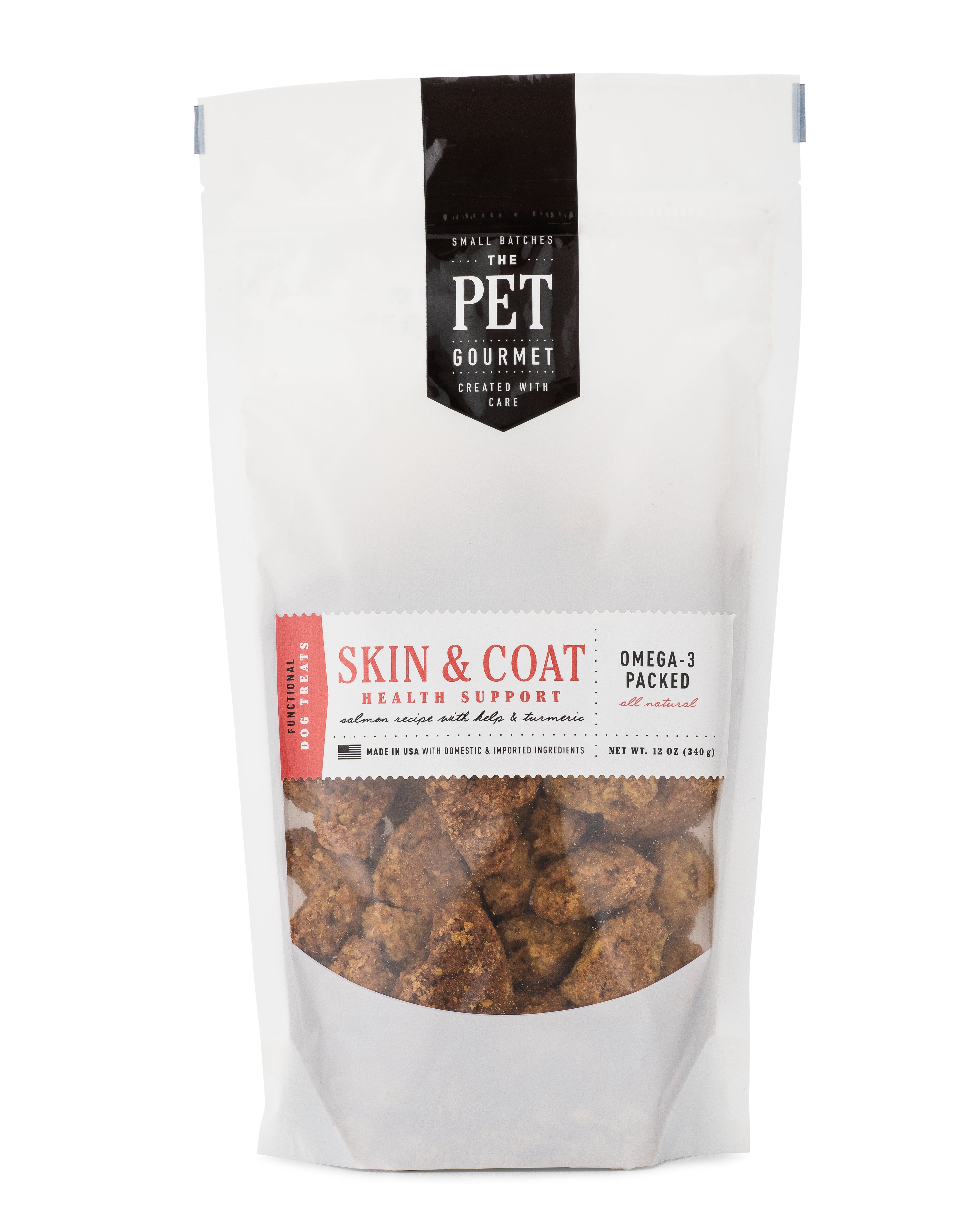
Skin & Coat Support Soft Chews for Dogs – 12 oz
Goat Milk for Dogs Side Effects and When It May Not Suit Your Dog
Some dogs may experience digestive upset from lactose, the milk sugar some dogs cannot fully break down. Signs can include gas, loose stool, or stomach discomfort, so introduce goat milk gradually.
Watch out: pouring a full serving into the bowl on day one is the fastest way to trigger a reaction. Start with half the suggested amount and hold for three to five days before increasing.
Lactose tolerance and dairy allergy are different problems
Lactose intolerance is a digestive limitation. Dairy allergy is an immune response to milk proteins, and it can cause itching, hives, ear infections, or gastrointestinal signs even when the amount is tiny. A dog with a confirmed dairy allergy should not receive goat milk toppers, because goat milk still contains milk proteins. Many claims that goat milk is hypoallergenic or gentler for sensitive stomachs are not backed by veterinary evidence, according to Pet Sweets Lab's analysis of goat milk claims.
Conditions that warrant a conversation with your veterinarian
Some dogs should not receive goat milk toppers without veterinary sign-off. The list below is not exhaustive, but it covers the situations most often seen in practice.
Confirmed lactose intolerance or a history of dairy-related upset. Even small amounts can trigger gas and loose stool.
Known dairy allergy. Goat milk proteins can drive the same immune response as cow's milk proteins.
Pancreatitis or a history of pancreatitis. Goat milk is relatively high in fat, and a sudden fat load is a known trigger for flare-ups.
Food allergies or an elimination diet. A topper introduces new proteins and can undermine a carefully controlled trial.
Kidney disease or other conditions managed with a therapeutic diet. The extra protein, phosphorus, and calories can work against a prescription plan.
Puppies still on a complete growth diet. A topper can unbalance a diet that is already formulated to meet growth requirements.
Dogs on a vet-prescribed diet for any medical condition. Adding anything outside the plan should be cleared first.
Animal Wellness Magazine notes lactose risks and situations where goat milk may be unsuitable, though serving guidance varies by dog (Animal Wellness Magazine on goat milk risks). A common pattern is that owners who introduce goat milk slowly and watch stool quality for the first week have far fewer problems than owners who free-pour.
What the evidence does and does not show
The health claims around goat milk deserve a closer look. A 2023 review in Food Reviews International examined goat milk's functional properties and reported research on potential immune and anti-inflammatory effects, yet the authors did not study dog toppers specifically (the PubMed Central review). That gap matters. Established nutritional facts, protein, calcium, fat, and moisture, are well supported. Proposed benefits such as improved digestion or immune support in dogs are plausible but not proven at topper doses.
Food safety and handling
Raw milk carries bacterial risks, including Salmonella, Listeria, and E. coli, so pasteurized products are the safer choice for most households. Store open containers as the label directs, keep servings fresh, and discard anything left out over two hours. For powdered toppers, mix with warm, not boiling, water and refrigerate leftovers promptly. These steps matter more for dogs with compromised immune systems, puppies, and seniors.
How Much Goat Milk for Dogs Per Day by Size and Life Stage
There is no single universal serving size, so start small and adjust. Introduce goat milk gradually and watch how your dog responds over the first week. The table below gives starting amounts and typical daily ranges by size, but the right amount also depends on calorie budget, life stage, and body condition.
Dog Size
Starting Amount
Typical Daily Range
Notes
Small (under 20 lb)
1 teaspoon
1-2 teaspoons
Split across meals
Medium (20-50 lb)
1 tablespoon
1-2 tablespoons
Once daily is common
Large (50-90 lb)
1-2 tablespoons
Up to 3 tablespoons
Watch calorie total
Puppy
1 teaspoon
Per vet guidance
Keep growth diet complete
Senior
1 teaspoon
1-2 teaspoons
Go slow, monitor stool
A gradual introduction plan
Treat the first week as a test, not a target. Start with half the suggested serving for three to five days. If stool stays firm and appetite is normal, move to the full starting amount for another three to five days, then consider the upper end of the range. If you see gas, loose stool, or stomach discomfort, drop back to the last amount that agreed with your dog or stop altogether.
Calories and body condition
Goat milk is not calorie-free, and a topper adds to the daily total. If your dog is overweight or on a weight-management plan, measure the topper into the daily calorie budget rather than adding it on top, and start at the lower end of the range.
Watch out: free-pouring a topper is the most common way owners accidentally add more calories than intended. Use a measuring spoon, not a scoop from the bag.
Life-stage adjustments
For our Goat's Milk & Blueberry Sprinkles, the label suggests sprinkling up to 1 tablespoon over a meal once daily. Treat any topper as a supplement, not a meal replacement.
How to evaluate a commercial topper label
Read the label before you read the marketing. Look for goat milk as the first ingredient, a clear guaranteed analysis with protein and fat, no added sugars or artificial flavorings, and disclosure of any probiotic strains if claimed. A product that lists "goat milk" but leads with fillers or sweeteners is not the same as a short, honest ingredient list. Pasteurized products are the safer choice, and the label should say so.
How to Use Goat Milk as a Dog Food Topper
Using goat milk as a topper takes about a minute. The goal is to add flavor and nutrition without overhauling your dog's diet.
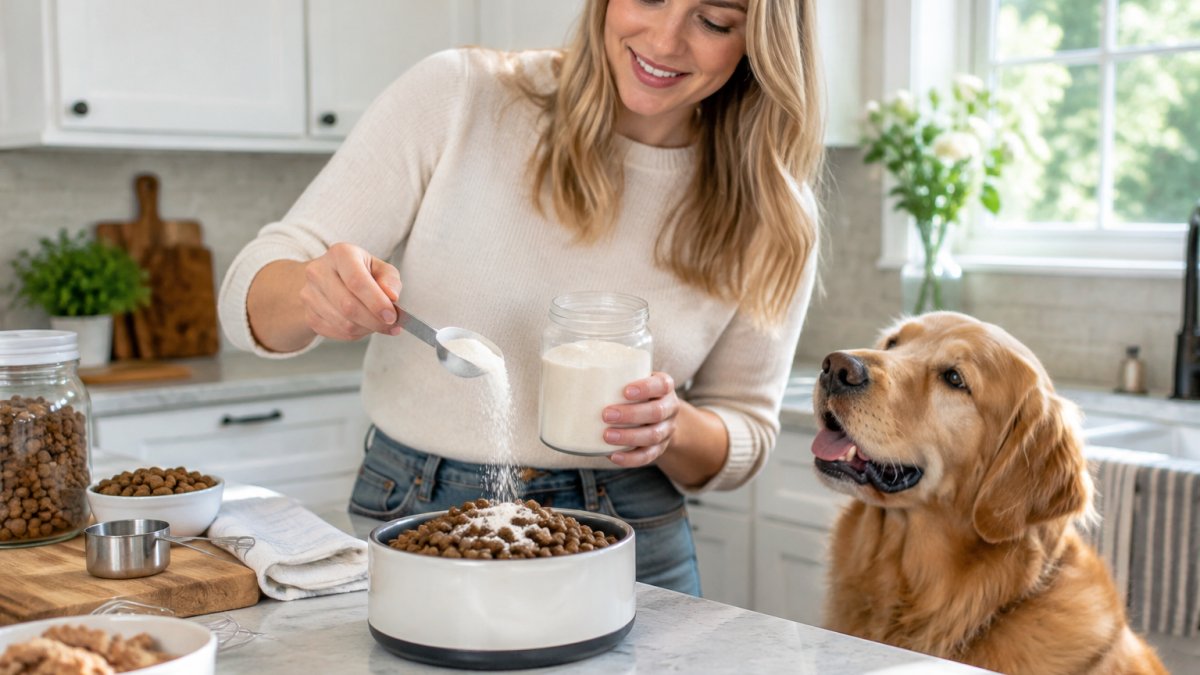
Woman sprinkling powdered goat milk topper onto a bowl of dog kibble as a golden retriever waits nearby
(/products/goats-milk-sprinkles) use just two ingredients, goat's milk and blueberries, with a guaranteed analysis showing 25% minimum crude protein.
When you evaluate a label, check these points:
Goat milk is the first ingredient
No artificial colors, flavors, or fillers
Clear guaranteed analysis with protein and fat
Pasteurized for food safety
A serving size that fits your dog
Raw milk carries bacterial risks, so pasteurized products are the safer choice for most households. Store open containers as the label directs and keep servings fresh.
Adding a Goat Milk Topper to Your Dog's Routine
Building a routine is where the benefits of goat milk toppers for dogs actually show up.
Pick one meal a day and add the topper at the same time. To round out the routine, browse our functional support range for complementary products that fit the same bowl.
The honest takeaway: goat milk is a pleasant, nutrient-rich addition that many dogs enjoy, but it is not a miracle food.
Adding a topper is one of the easiest ways to make mealtime more appealing, but the real win comes from choosing products with ingredients you trust.
Frequently Asked Questions
Can I give my dog goat's milk every day?
Daily serving is fine for most dogs when you keep the portion small. A common approach is up to 1 tablespoon of a goat milk topper over one meal per day, which is the serving direction on products like The Pet Gourmet's Goat's Milk & Blueberry Sprinkles. Start with half that amount for the first week to see how your dog's stomach responds, then adjust. Dogs with a known dairy sensitivity should be introduced more slowly or checked with your vet first.
What are the side effects of goat milk for dogs?
The main reported risk is digestive upset linked to lactose, including loose stool, gas, or vomiting in dogs that do not tolerate dairy well. Tolerance varies by dog. Serving too much at once is the most common cause of a reaction. Keep portions small, introduce gradually, and stop if symptoms persist.
How much goat milk can I give my dog per day?
For a powdered goat milk topper, up to 1 tablespoon sprinkled over a meal once daily is a typical starting point for small to medium dogs. The topper is a supplement, not a meal replacement. Mix with about 1/4 cup of warm water if you want to make a broth.
Is goat milk good for dogs with allergies?
It depends on what your dog is allergic to. If your dog reacts badly to dairy, goat milk may still trigger symptoms. Check with your vet if reactions are recurring.
Sassie was a little anxious at first with the pizza soft baked treat but it’s her favorite now. Which we have to order more of them. They smelled good enough for me to possibly try a bite.