


Both my pups loved your products.
It's a great healthy treat that they took their time eating and thoroughly enjoyed.
My pup loves his new snacks! I love that they have few ingredients with no artificial or unnecessary flavors.
Last Updated: November 24, 2026
Quick Summary
To introduce new chews to puppies, offer one chew type from one protein at a time and supervise the first session closely, starting at five minutes. Then wait 48 to 72 hours before introducing another new chew so you can spot digestive upset, itching, or stool changes.
Introducing new chews to puppies works best as a slow, one-at-a-time process: check your puppy's age and teething stage, offer a single chew from a single protein, supervise the first session closely, then wait 48 to 72 hours before trying anything new. For help choosing wisely, see our guide to all-natural dog chews for puppies.
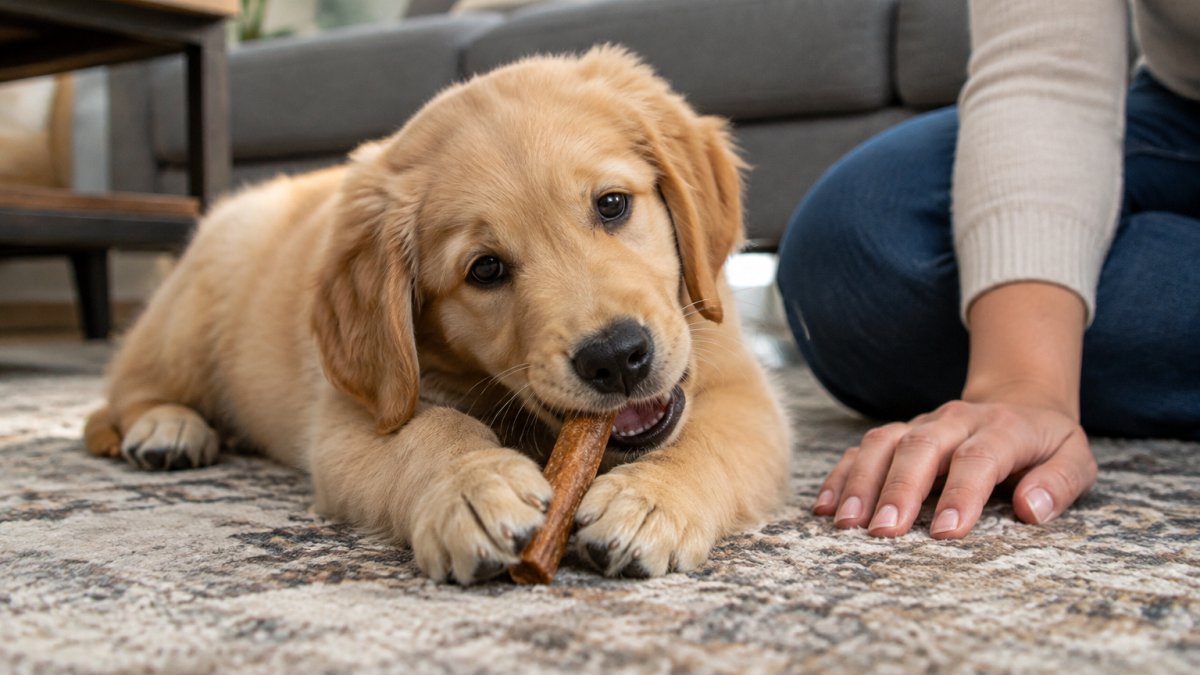
Age decides everything about the first chew. Puppies under six months are still working through their baby teeth, with adult teeth arriving around four to six months, so their mouth is sore, their bite is weak, and their gums are sensitive. Hard chews are a bad fit during this window; softer textures suit a teething mouth far better.
Pick a single chew type and a single protein source, then stop there. If you offer three new flavors in one week, you will never know which one caused the loose stool or itchy ears. One chew. One protein. One clean data point. This matters most for puppies with sensitive stomachs, where a single new ingredient is far easier to track than a mixed bag.
Supervise every first chew from start to finish, with your puppy within arm's reach. Short sessions are the rule. A 2021 survey-based study in Applied Animal Behaviour Science on chewing behavior in dogs examined chewing and dissecting of non-edible items, especially in puppies and adolescent dogs, which is exactly why supervision matters: young dogs do not always chew the way you expect.
Wait 48 to 72 hours before introducing another new chew, according to guidance from Quanluna Food on introducing new chew types. That window gives you time to spot digestive upset, itching, or a change in stool before you add the next variable. Keep a simple log: date, chew type, protein, and what happened.
Here is the slow, one-variable-at-a-time introduction process the article recommends.
| Step | What to do | Timing |
|---|---|---|
| 1 | Check age and teething stage; choose softer textures | Under six months |
| 2 | Pick one chew type and one protein source | One at a time |
| 3 | Supervise the first session within arm's reach | Start at five minutes |
| 4 | Wait before introducing another new chew | 48 to 72 hours |
Puppies can chew on edible natural chews, rubber toys, and food-stuffable toys, matched to their mouth size and chew intensity. Edible options like soft chew sticks suit teething mouths, while rubber toys and food-stuffable puzzles absorb destructive behavior without adding calories. For a deeper breakdown, our ultimate guide to dog chews walks through bully sticks, collagen chews, and softer options side by side.
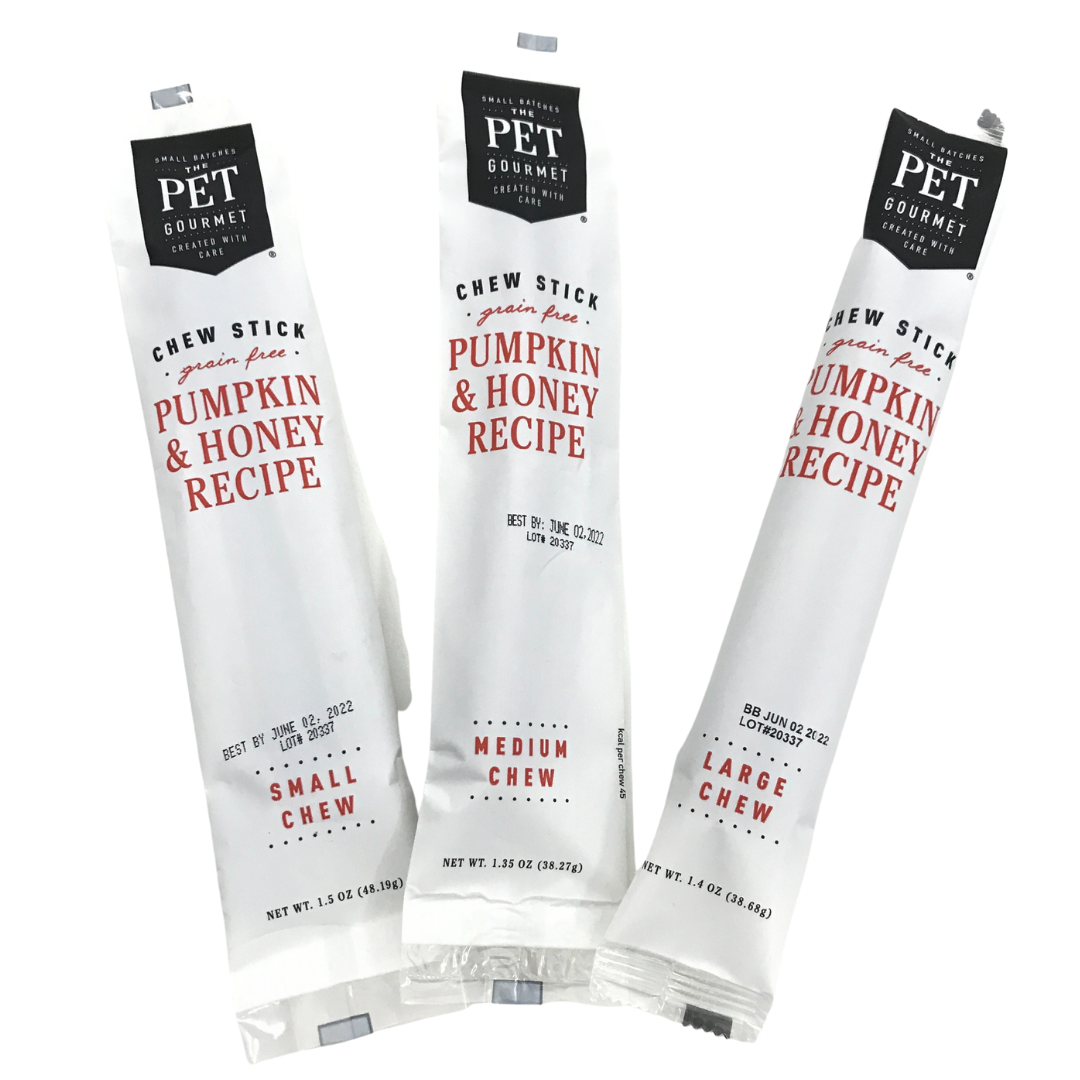
The best chews for puppies under six months are soft, digestible, and sized to a small mouth. Hard antlers and dense bones are too much for baby teeth. Look for chews you can press a fingernail into, a chew that is small but rock-hard still risks a cracked baby tooth. Our Small Pumpkin & Honey Gourmet Chew Sticks are made with real pumpkin, honey, cinnamon, and ginger in a 4 oz bag for $6.99. Their smaller size suits smaller dogs and portions, and you can serve them whole or break them into pieces to fit your dog's size and treating style.
A puppy chew session should run about 10 to 15 minutes for a young puppy, with short, supervised sessions several times a day rather than one long marathon. There is no scientifically established universal time limit for every puppy, and EcoKind Pet Treats' guidance on introducing yak chews to puppies makes that point clearly while still advising short, supervised first sessions.
Start at five minutes. Set a timer rather than eyeballing it, because a puppy that is calm and engaged looks like it could go all day. Five minutes is enough to learn three things: whether your puppy grips the chew correctly, whether pieces break off, and whether interest holds or fades. If your puppy stays calm and engaged, add two to three minutes next time. If they gulp, end the session and switch to a softer chew.
Teething puppies between four and six months often want more frequent, shorter sessions because sore gums make long chewing uncomfortable. Offer four to five sessions of five minutes rather than two long ones. Once adult teeth arrive around six to seven months, most puppies tolerate longer sessions and firmer textures, and you can stretch toward the 15-minute upper bound.
Stop the session immediately if you see any of the following:
Watch out: a puppy that finishes a chew far faster than expected is not a fast chewer, it is a swallowing risk, and the fix is a larger or firmer chew, not a longer session.
The timer is your cue to take the stub away before it becomes a choking hazard. Pair it with a trade, offer a treat in exchange for the remaining piece, so the end of a session is a positive event rather than a confiscation.
Yes, a new chew can upset a puppy's stomach, especially when it introduces an unfamiliar protein or rich ingredient. Puppies have sensitive digestive systems, and sudden diet changes are a common cause of loose stool. Watch for these signs in the 48 to 72 hours after a new chew:
Stop the chew at the first sign of trouble and note what you fed. If symptoms persist or worsen, call your veterinarian. For puppies prone to tummy trouble, our guide to safe natural treats for sensitive stomachs covers gentler options in more detail.
Run a simple elimination protocol instead of guessing. Feed one protein for two weeks with no other new foods. Log every reaction, even mild ones. If symptoms appear, remove that protein for four weeks, then reintroduce it once. A reaction on the second try confirms the trigger. This is the same logic veterinarians use for food trials, and it works at home with a notebook and patience.
Supervision, rotation, and cleaning turn chewing from a risk into a routine. Most guides cover supervision well and treat cleaning as an afterthought, one line about soapy water. That is the gap we want to close here, because a chew that is not maintained properly becomes a bacterial reservoir or a choking hazard long before it wears out.
Supervise every first chew from start to finish, with your puppy within arm's reach. Short sessions are the rule. A 2021 survey-based study in Applied Animal Behaviour Science on chewing behavior in dogs examined chewing and dissecting of non-edible items, especially in puppies and adolescent dogs, which is exactly why supervision matters: young dogs do not always chew the way you expect.
'Within arm's reach' means you can physically remove the chew in under two seconds. That rules out supervising from another room, from the couch while the puppy is on the floor across the room, or while scrolling on your phone. A 2023 study in Animals on long-lasting chews and positive emotional states explored how food-based enrichment engages dogs during short periods of social isolation, which is a reminder that chews do real emotional work, and that work happens best when you are nearby.
Watch out: resource guarding can start early, so practice trading a chew for a treat while your puppy is calm, before guarding behavior appears, not after.
Rotate chews every few days to prevent boredom, and keep three to five items in rotation so novelty never runs out. A workable pattern is three chews in active rotation, swapping one out every two to three days. Rotating daily makes each chew feel new and exciting, which encourages gulping; rotating too rarely lets a puppy bore of the chew and redirect to furniture.
Pair rotation with a simple rule: one edible chew and two non-edible toys in active rotation at a time. That keeps the edible chew special without making it scarce enough to trigger guarding. Store out-of-rotation items where your puppy cannot see them, a clear bin on the floor is an invitation, not storage.
This is where most guides stop short.
Rubber and food-stuffable toys: Wash weekly with warm water and a mild dish soap, then rinse thoroughly, residual soap can cause stomach upset.
Natural edible chews (sticks, collagen, bully sticks): These are not washed, washing softens them and encourages mold.
Nylon and hard plastic chews: Scrub with hot water and a stiff brush weekly, and inspect for rough edges.
Five minutes once a week is enough. The point is catching the worn-out chew before your puppy does.
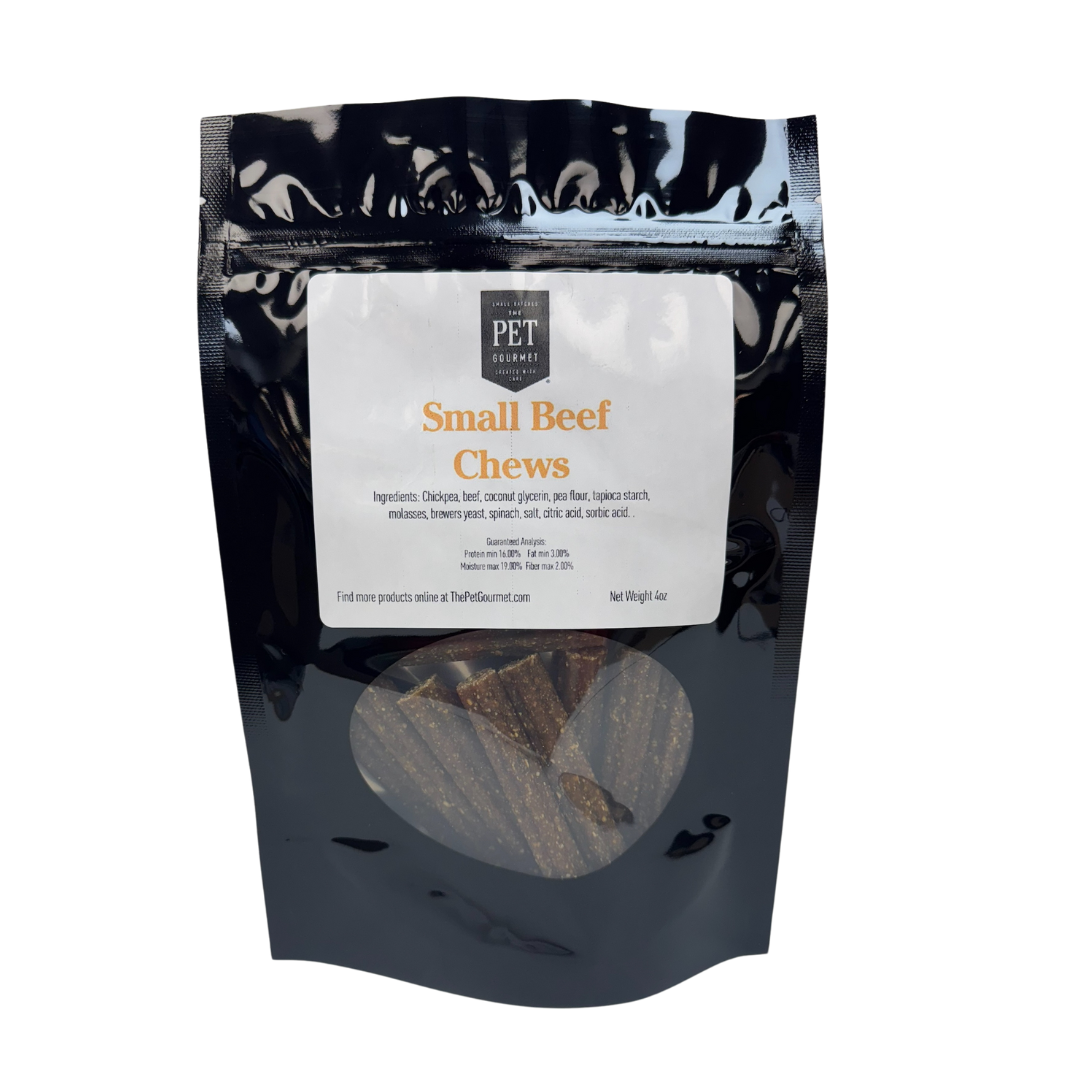
Start with one chew, one protein, and one short supervised session. Our Small Beef Gourmet Chew Sticks are made with real beef and 16% minimum crude protein, and come in a 4 oz bag for $5.99. You can browse the full chew collection or start directly with the Pumpkin & Honey Gourmet Chew Sticks for your puppy's first taste.
The hardest part of introducing chews is not picking one. It is resisting the urge to try everything at once. Slow down, log what you feed, and let your puppy's reaction guide the next step.
Most puppies can start edible chews once their puppy teeth are in, usually around 8 to 12 weeks, but the chew has to match their mouth size and texture. Start with soft, small chews and always supervise the first sessions. Puppies chew heavily, so redirect that urge to appropriate chews early. Ask your veterinarian before adding any chew if your puppy has a health issue.
Yes, every time, especially during the introduction phase. Supervision lets you watch for choking hazards, resource guarding, and how quickly your puppy breaks pieces off. Chews can serve as enrichment, but that does not replace watching your puppy. Stay close, keep sessions short, and take the chew away once it gets small enough to swallow.
They can, which is why one new chew at a time matters. Introduce a single chew and wait 48 to 72 hours before trying another, a spacing commonly recommended. Watch for loose stool, vomiting, gas, or scratching. If your puppy has reacted badly to treats before, check the full ingredient list first and keep a simple log of what you fed and when. Stop the chew and call your veterinarian if signs persist beyond a day.
Rotate textures and flavors, not everything at once. Keep two or three safe options in circulation and swap one out every few days so chewing stays interesting and destructive behavior stays low. Any brand-new chew still gets its own 48 to 72 hour introduction window before the next new item. Owners shape how often dogs get to chew, so build rotation into your routine rather than offering whatever is nearby.

Your cart is currently empty.