


Both my pups loved your products.
It's a great healthy treat that they took their time eating and thoroughly enjoyed.
My pup loves his new snacks! I love that they have few ingredients with no artificial or unnecessary flavors.
Last Updated: November 22, 2026
Quick Summary
Safe natural treats for sensitive stomachs are built around a single named protein with a short ingredient list, free of artificial additives, fillers, and common allergens. Start with single-ingredient dehydrated or freeze-dried treats, and introduce any new treat one at a time, waiting 48 to 72 hours before increasing the amount.
Safe natural treats for sensitive stomachs are treats made from simple, recognizable ingredients that a dog's digestive system can process without triggering upset, typically built around a single protein source and free of artificial additives, fillers, and common allergens.
That distinction matters more than most owners realize.
Below, we break down how to read a label, which proteins tend to be gentlest, and how to introduce a new treat without setting off a week of loose stools.
The clearest sign of digestive sensitivity is a pattern, not a one-off. A single soft stool after a new treat is normal. Repeated loose stools, gas, or vomiting after meals points to something worth investigating.
Watch for these signals:
A common mistake is blaming the food when the culprit is the treat. Owners often switch kibble three times before realizing a single daily training reward was the trigger.
Choosing a treat for a sensitive stomach comes down to three checks: a short ingredient list, a single named protein, and no artificial preservatives or colors. If you cannot identify every ingredient in under ten seconds, put the bag down.
The closing people sentence: The woman is American.
Start with a named protein you recognize, then look for gentle fiber and simple binders. The shorter the list, the easier it is to isolate a problem if one appears.
Pumpkin deserves special mention because it is a natural source of fiber.
Avoid treats with long ingredient lists, unnamed "meat meal," artificial colors, and chemical preservatives. These are the most common triggers for digestive upset in dogs with food sensitivities.
Specific items to skip:
Watch out: "grain-free" does not automatically mean gentle. Some grain-free treats swap in rich legume proteins that are harder on a sensitive gut than a simple oat-based biscuit.
Single-ingredient dog treats are the safest starting point for a dog with a sensitive stomach because they remove the guesswork entirely. When a treat contains one ingredient, you know exactly what to blame if symptoms appear.
Dehydrated and freeze-dried single-protein treats work well because they are minimally processed and highly digestible. For owners who want a ready-made option, our Beef Lung Cubes for Dogs are made with 100% USA-sourced beef lung, and our Beef Liver Jerky Strips for Dogs snap easily into small training rewards. If chicken is the gentler protein for your dog, the Chicken Jerky Strips for Dogs use USA-sourced chicken breast.
The tradeoff is palatability. Some dogs turn their nose up at plain dehydrated protein at first. Introduce it as a training reward rather than a meal replacement, and most dogs come around within a few days.
Homemade dog treats for sensitive stomachs give you control over every ingredient, and you can leave out anything your dog has reacted to before.
A simple starting recipe:
If you would rather skip the measuring, our Dog Treat Biscuit Mix is wheat-, corn-, and soy-free and follows exactly that method. Keep homemade batches small and refrigerate them, since they contain no shelf-stabilizing preservatives.
Introduce any new treat one at a time, starting with a single small piece and waiting 48 to 72 hours before increasing the amount. This gradual introduction helps you catch a reaction early. The protocol below adds the two things most guides leave out: a measurable portion and a written record you can act on.
Treats should generally make up no more than about 10 percent of a dog's daily calories. To turn that into a number, find the kilocalorie (kcal) per cup or per can on your dog's food label and the daily feeding amount your veterinarian or the label recommends. If your dog eats about 1,000 kcal per day, treats get roughly 100 kcal. A small biscuit often runs 20 to 40 kcal, and a piece of dehydrated liver can run 5 to 15 kcal depending on size, so check the guaranteed analysis or contact the maker when the kcal is not printed. Weigh treats on a kitchen scale in grams for the first week rather than eyeballing pieces, because "one small piece" varies wildly between a 10-pound terrier and a 90-pound retriever.
Use a simple 1-to-5 stool scale (1 is hard and dry, 3 is well-formed, 5 is liquid) and record the score for each bowel movement alongside gas, vomiting, appetite, and scratching. A single score of 4 that resolves by the next meal is usually not a stop signal. Two or more consecutive scores of 4 or 5, any vomiting, or a drop in appetite is. Bring the log to your veterinarian if you stop twice in a row, because the pattern across proteins is more useful than any single reaction.
Watch out: never introduce two new treats, a new food, and a new supplement in the same week, or you will not know which one caused the problem and you will have to start the whole test over.
Stop the treat and let symptoms clear for at least 48 hours before trying a different single protein. If loose stools, vomiting, or reduced appetite persist beyond a couple of days, or if you see blood, repeated vomiting, or signs of pain, stop experimenting and contact your veterinarian.
Here is the gradual introduction timeline the article lays out, from the first single piece to the two-week hold.
| Stage | What to do | Duration |
|---|---|---|
| Day 1 | Offer one piece in the morning, observe 24 hours | 1 day |
| Days 2-3 | Two to three pieces daily if no symptoms appear | 2 days |
| Days 4-7 | Move toward the calculated treat budget | 4 days |
| Days 8-14 | Hold at normal portion and keep logging | 7 days |
| Stop signal | Two or more consecutive stool scores of 4 or 5 | Immediate |
| After stopping | Let symptoms clear before trying a different protein | At least 48 hours |
The best approach for a dog with diarrhea is to simplify the diet, not add to it. A bland base of gentle protein and fiber, plus a digestive supplement, settles most mild upset within a few days. But before you reach for another bag of treats, it helps to know which problem you are actually solving, because general digestive sensitivity and a true food allergy call for different plans.
A sensitive stomach usually shows up as loose stools, gas, or vomiting that tracks with rich, fatty, or novel ingredients and improves when the diet is simplified.
A true elimination diet is best guided by a veterinarian, since switching proteins on your own can make it hard to get a clean result. If your dog has chronic itching plus digestive signs, ask your veterinarian about an elimination trial before you buy another treat.
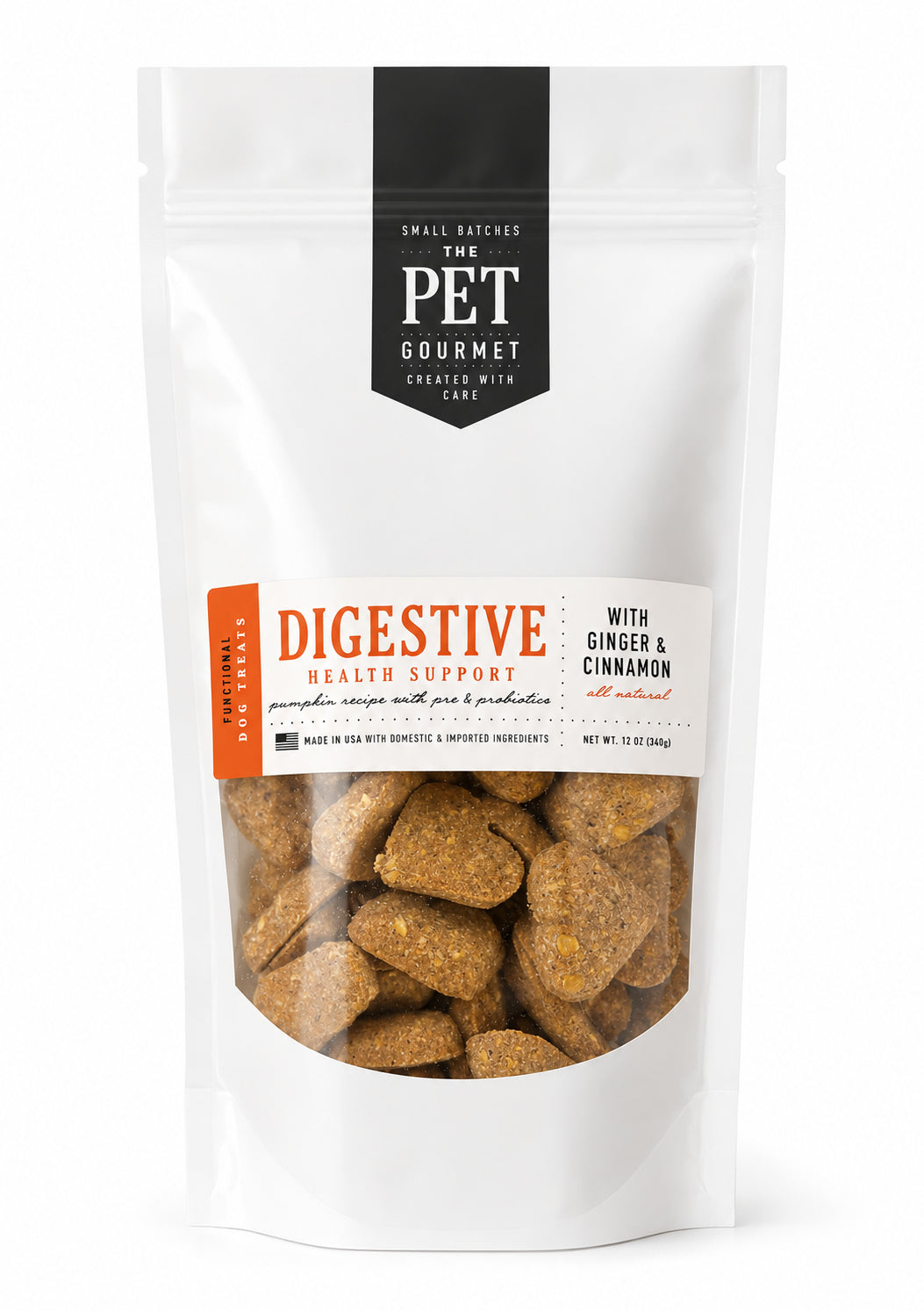
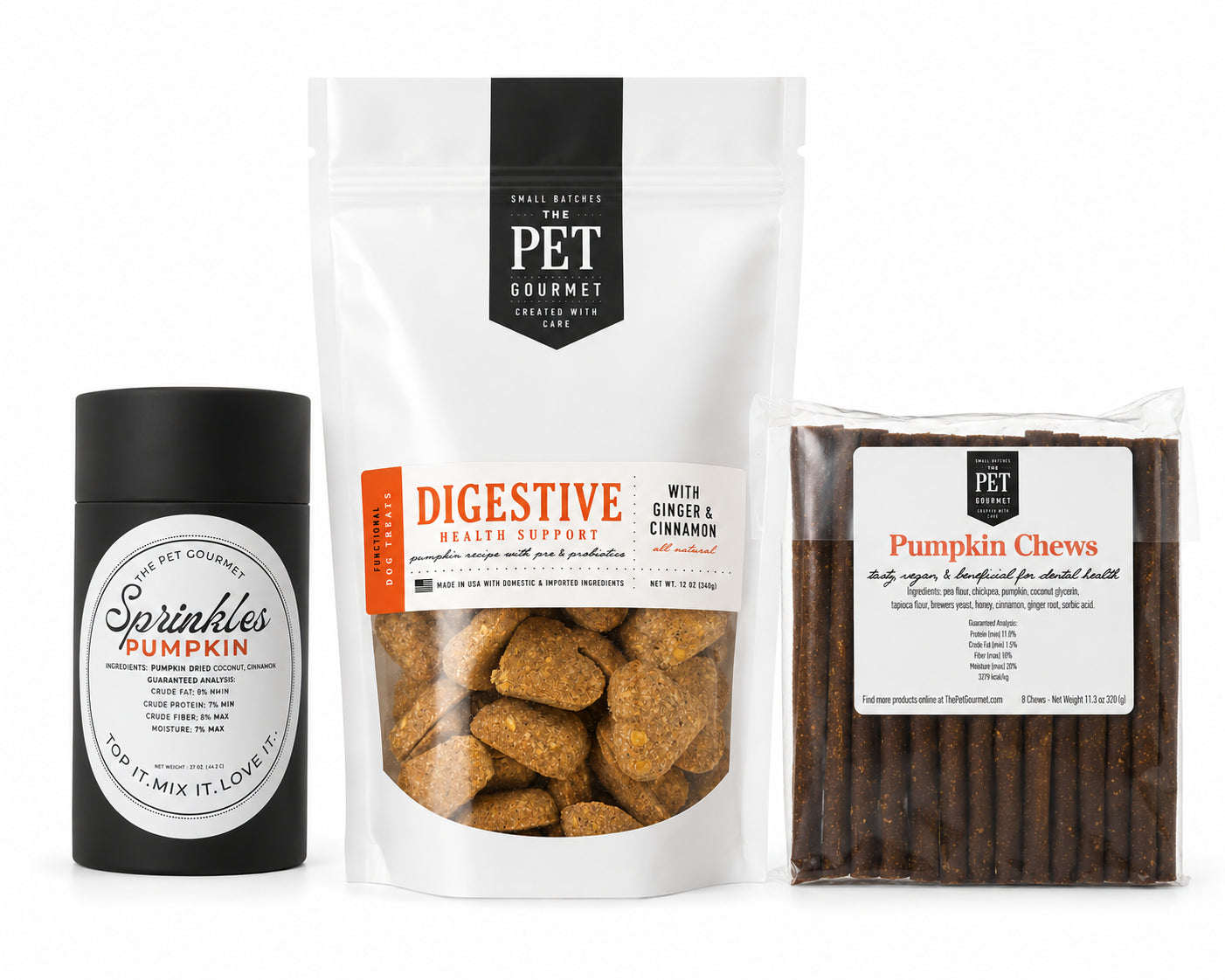
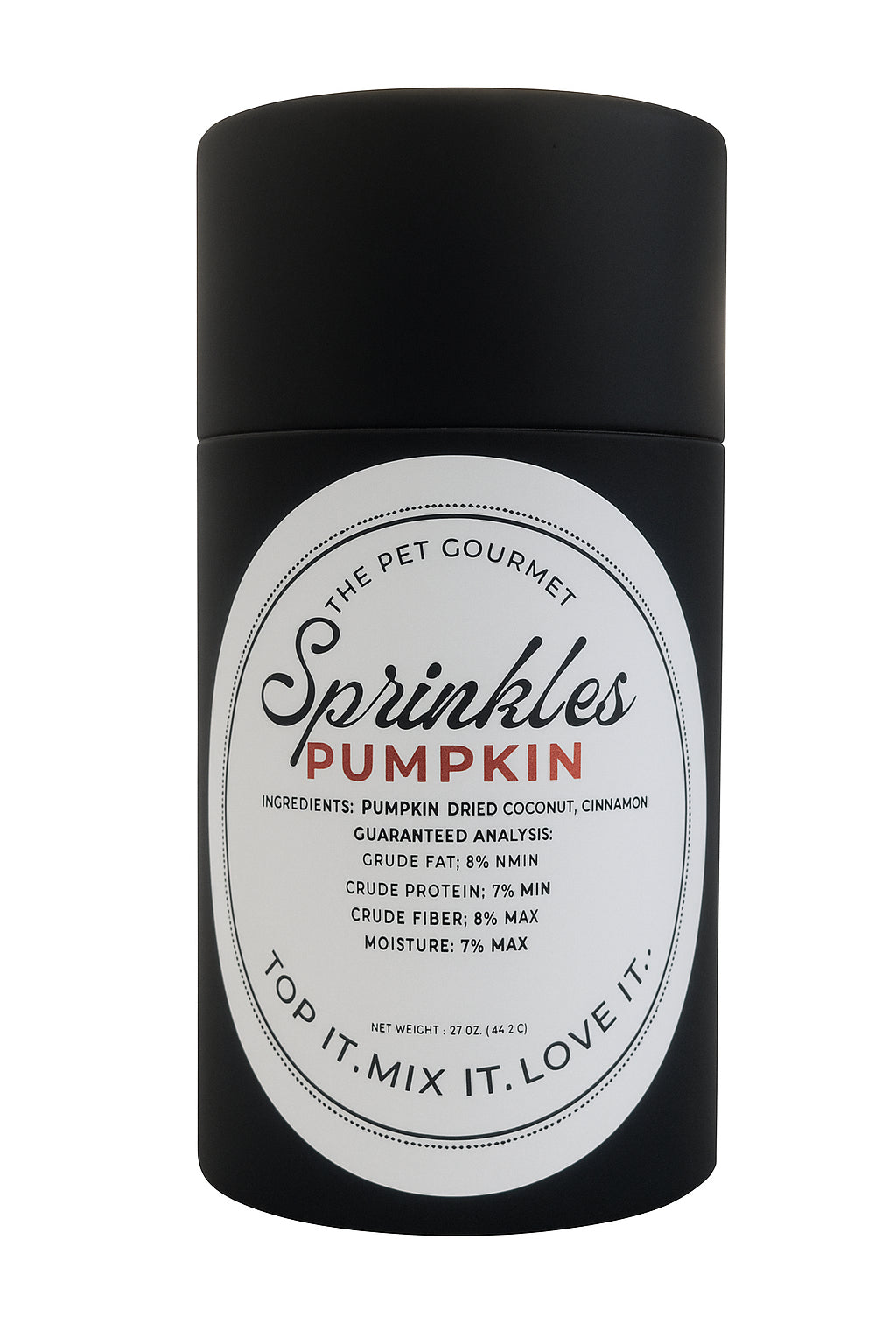
Pumpkin is the workhorse here because it adds soluble fiber that supports stool consistency. Our Pumpkin Digestive Support Soft Chews for Dogs combine real pumpkin with prebiotics, probiotics, ginger, and cinnamon to support healthy digestion, normal stool consistency, and a balanced gut microbiome. For a dog in the middle of a flare-up, the Pumpkin Digestive Wellness Bundle for Dogs pairs those chews with pumpkin dental chews and a pumpkin meal topper. A meal topper like Pumpkin Sprinkles adds natural pumpkin fiber to plain kibble without changing the whole diet.
Watch out: persistent diarrhea lasting more than a couple of days, any diarrhea with blood, repeated vomiting, or a dog that seems painful or lethargic warrants a veterinary visit rather than another treat swap. Treats support a plan; they do not replace a diagnosis.
Finding treats that do not upset your dog should not require a chemistry degree. Start with single-ingredient proteins, read every label, and introduce one new treat at a time while you track symptoms.
At The Pet Gourmet®, we bake premium dog treats and meal toppers in the USA with real ingredients and no fillers or artificial additives. Our Pumpkin Digestive Support Soft Chews and our pumpkin toppers are a simple way to add pumpkin to your dog's routine.
If your dog has reacted badly to treats before, the fix is rarely a more expensive bag. It is a shorter ingredient list and a slower introduction.
Look for treats with a short ingredient list built around gentle proteins like chicken, turkey, or fish, plus fiber sources such as pumpkin or sweet potato. Single-protein and limited-ingredient options reduce the chance of a reaction. The Pet Gourmet's Lil' Bones Pumpkin Maple treats use just six simple ingredients and only 3 calories each.
Skip treats loaded with artificial additives, preservatives, and fillers like corn, wheat, and soy. Also avoid rich, high-fat treats and anything with multiple novel proteins mixed together, since it becomes impossible to tell which ingredient caused a reaction. The CDC also advises against raw pet food and treats because of contamination risk. Stick to cooked, minimally processed treats with recognizable ingredients.
Often, yes. A single-ingredient treat removes guesswork: if your dog reacts, you know exactly what caused it. Freeze-dried or dehydrated single-protein treats like plain chicken or fish skin are highly digestible and easy to portion. That said, single-ingredient treats still need gradual introduction and portion control, and they should not replace a balanced diet.
Start with one small piece, then wait 24 to 48 hours and watch for vomiting, diarrhea, loose stools, gas, or bloating. If nothing changes, increase slowly over a week. Introduce only one new treat at a time so you can trace any reaction. Keep a simple log of what you fed and when symptoms appeared, and stop the treat immediately if problems show up.
Treats should make up no more than about 10 percent of your dog's daily calories. For a dog on a 400-calorie diet, that is roughly 40 calories of treats per day. Tiny rewards like The Pet Gourmet's 3-calorie Lil' Bones can help you stay under that limit during training. Count treats against daily intake, especially if you are also using meal toppers.
Call your vet if vomiting or diarrhea lasts more than 24 hours, if you see blood in the stool, or if your dog stops eating, seems lethargic, or shows signs of pain. Persistent gas and bloating also warrant a check. Food allergies and digestive sensitivity can look similar, and only a vet can tell them apart or rule out a medical condition.

Your cart is currently empty.